
Biofuels Could Clean Chernobyl Badlands
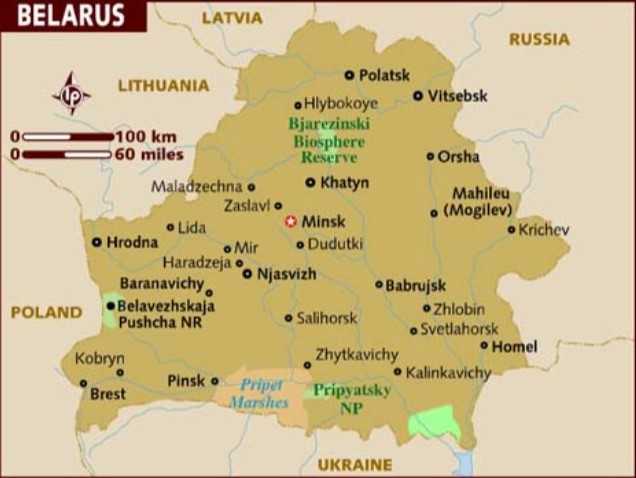
(1) Belarus, the country affected by much of the fallout after the accident at the Chernobyl nuclear power station in 1986, is planning to use crops to suck up the radioactive strontium and caesium. A 40,000-square-kilometre area of south-east Belarus contains so many radioactive isotopes that it will not be fit for growing food crops for hundreds of years, as the isotopes will not have decayed sufficiently. But a team of Irish biofuel technologists, representatives of the company Greenfield Project Management, visited Minsk, the capital of Belarus, hoping to strike a deal with state agencies to buy radioactive sugar beet and other crops grown on the contaminated land to make biofuels for sale across Europe.
(2) Greenfield Project Management insists that no radioactive material will get into the biofuel because only ethanol is distilled out. According to the company’s researchers, in distillation, only the most volatile compounds rise up the tube, while everything else is left behind. The heavy radioactive residues will be burned in a power station, producing a concentrated “radioactive ash”. This can be disposed of at existing treatment works for nuclear waste. The UN’s International Atomic Energy Agency, however, is not so sure about the safety of the project. While the biofuel processing should not be a hazard, neither Belarus nor Ireland has an adequate way of disposing of the radioactive residues. The disposal facilities Belarus set up after the Chernobyl accident are inadequate, so providing safe storage is a major goal before the project starts up. Belarus has been tight-lipped about these plans, though it is clearly keen on tackling the problem. Moreover, soil decontamination has been mentioned in the UN as “the number one priority” for the country’s government.
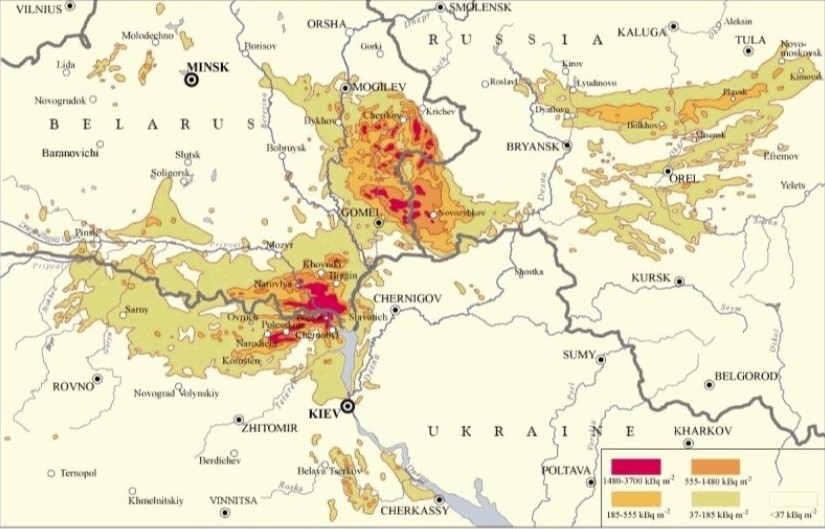
(3) Chernobyl is in Ukraine, close to the Belarus border. At the time of the accident, prevailing winds meant that 80 per cent of the fallout from the burning reactor fell in Belarus. The accident left vegetation and soil heavily contaminated with strontium-90, caesium-137, plutonium and americium. The population of the most heavily polluted areas was evacuated, but 8 million people still live in a contaminated zone where farmers grow some grain crops. Since the radioactive material concentrates in roots and stalks, they are ploughed back into the soil after harvesting. So the soil is almost as heavily contaminated today as it was after the accident. A study conducted in 1999 at the Centre for Ecology and Hydrology in Lancaster, UK, found that tens of thousands of people in the contaminated region are consuming dangerous levels of radioactivity in their food. The Belarus government hopes that by growing biofuels and using the whole plant, it will be able to cleanse the soil and make it fit for growing healthy foods in 20 to 40 years.
(4) Greenfield Project Management plans to build the first biofuel distillery close to one of the most contaminated areas. The €500-million plant will turn half a million cubic metres of crops a year into 700 million litres of biofuels. As many as 10 more plants will follow, provided funding can be raised. The European Union reckons it will need about 25 billion litres of bioethanol by 2020 to meet green fuel targets. Greenfield Project Management also plans partnership with a state biotech company that wants to develop genetically modified crops able to clean the soil more quickly. The hope is that, in the long run, these measures will make life safer for local people.